
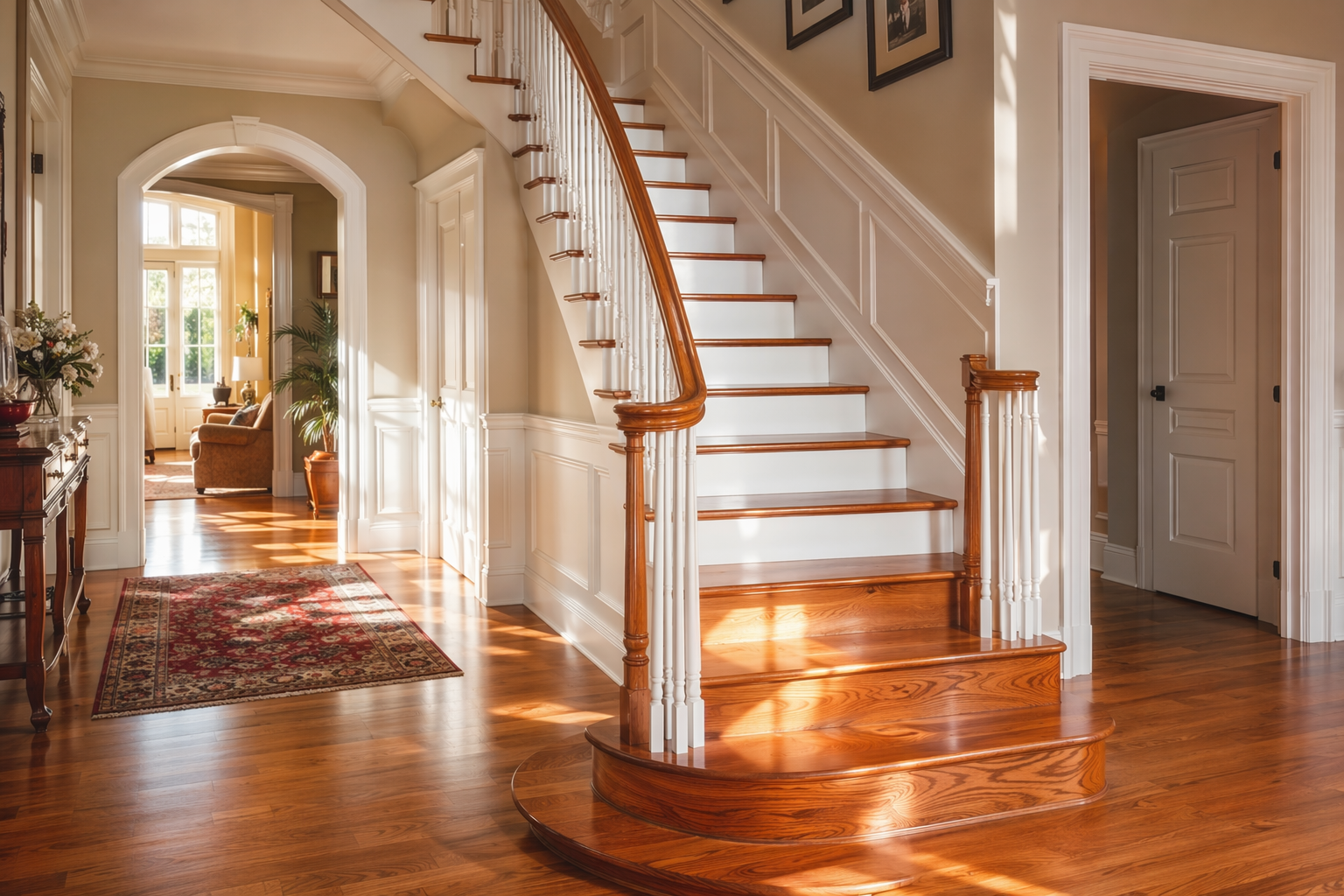
Introduction
Hardwood stairs can make a big difference to how your whole staircase looks and feels. They bring structure, warmth, and a nice finish that fit with both use and interior design. If you are planning staircase and interior upgrades for your home in Charlotte, NC, the material you pick and the way you install it matter as much as the style. MyNewSurface, a trusted local team for surfaces and remodeling, helps homeowners know all they need to about hardwood stairs. They guide you from picking the type of wood to choosing the final touches, making your staircase durable and well-finished.
Understanding Hardwood Stairs with MyNewSurface
A good set of stairs does more than just help people go from one floor to the next. It is made to hold up to daily use, make movement safe, and match your hardwood flooring for a nice look in your home. That is why it is important to pick the right material for your staircase. You should never choose just by color.
At MyNewSurface, the team helps homeowners in Charlotte find the best wood stairs for their houses by thinking about the things that matter. This includes picking the right wood species, choosing the tread type, and checking janka hardness. The janka hardness rating tells you how well the wood can hold up against dents, which is key when your set of stairs is used so much. It’s also good to know why having hardwood in your home makes sense.
Why Choose Hardwood for Your Charlotte, NC Home
Many homeowners in Charlotte look for materials that give both a good look and strong durability. Hardwood is a good choice for this. It can last for many years, it stays clean with little work, and it helps make your home worth more if you sell it. This is very important for residential stairs. These get a lot of foot traffic every day.
There are different types of hardwood, and each has something special. Red oak is a favorite for a long time because it is tough and has a grain many people like. White oak is known for a nice look and stands up well to wear. Hard maple beats red oak in strength, so it is a great fit for homes that get a lot of use. If you want style more than dent resistance, you can pick cherry or walnut.
Hardwood also gives you a lot of choices for finish. You can pick unfinished wood to put your own stain on at home. You can also use prefinished wood to get the job done quicker. The team at MyNewSurface helps Charlotte homeowners find the right wood for their traffic, style, and way of living.
The Local Expertise of MyNewSurface in Stair Installation
Stair work is not like swapping out one piece of flooring. Every staircase is different. The width, ends, landings, and finish will not always be the same. Because of this, good planning is needed before you buy stair treads or choose a new tread.
Home improvement projects in the Charlotte area need someone with local know-how. MyNewSurface gives homeowners guidance for their stairs. The team helps you decide if your staircase needs all-new hardwood stair treads or retrofitted treads. They also check if you need standard sizes or custom lengths. This makes the job go smoother and stops problems or wasted materials.
When you want to buy hardwood stair treads or custom lengths online, you can find big suppliers. But it helps to get advice for your whole home improvement project, and not just buy the treads. MyNewSurface is different in Charlotte because they know about flooring products and also have real experience with installing and remodeling staircases.
Types of Hardwood for Staircases
Not all hardwood works the same when you use it for stair treads. Some types are good because they are hard and stand up to heavy use every day. Other kinds are picked for what their color, texture, or grain pattern looks like. That is why looking at each wood species is important when you make a plan for your staircase.
Oak stair treads are still one of the top choices that people go for. But oak is not the only one. MyNewSurface helps homeowners in Charlotte compare different hardwood choices for stair treads. They focus on how each one looks, how much traffic there will be, and what people want in their finish. The most used wood species are worth a closer look if you want the best option for your treads.
Popular Hardwood Species: Oak, Maple, Cherry, and Walnut
The main types of hardwood used for stairs each serve a different purpose. Red oak is a dependable traditional choice. White oak has a more refined look and strong durability. Hard maple is excellent for busy homes, while soft maple works better in lower-use areas. Walnut and cherry lean more toward style-driven projects.
Here is a simple comparison based on the compiled product and species information:
| Wood Species | Janka Hardness Rating | Main Benefit for Stairs |
|---|---|---|
| Red oak | 1,290 | Very good durability, classic grain, common for residential stairs |
| White oak | 1,360 | Excellent wear resistance and versatile style |
| Hard maple | 1,450 | Strong dent resistance for heavy use |
| Soft maple | Around 950 | Lower cost and easier stain work for lighter traffic |
| Walnut | 1,010 | Rich color and upscale appearance |
| Cherry | 950 | Warm tone and elegant finish |
In Charlotte, MyNewSurface often helps clients narrow these options by use first, then style. That approach keeps your staircase practical while still aligning with your interior goals.
Comparing Durability, Grain, and Style Options
Durability begins with how hard the wood is, but the look of the wood is important too. If the wood has a higher janka rating, the stairs will hold up better against dents from heavy traffic. Still, how each kind of wood looks can change the style of your staircase. This matters a lot if you have an open plan at home.
If you want your hardwood stairs to seem more modern, going with a cleaner, uniform grain helps. Hard maple has a grain that looks the same all over, which is nice in simple homes. White oak brings some texture but does not make it look too busy or loud. Walnut will give the stairs some contrast and add depth, while cherry wood gives a warm look that works well for many types of decor.
- Choose hard maple for stairs when you want something bright with a uniform grain.
- Use white oak if you want stairs to be tough but still have a subtle grain.
- Pick walnut when you want darker stairs that stand out and have more style.
- Select red oak when you want stairs you know will last and be a sensible choice for the money.
MyNewSurface helps homeowners in Charlotte look at both style and how the stairs will work in daily life, so their new staircase feels just right and up to date.
Essential Stair Parts for a Hardwood Project
A hardwood stair remodel is about more than just the boards you walk on. The whole staircase has parts that matter for safety, looks, and following building codes. Important pieces in the system are treads, each riser, nosings, the handrail, and balusters.
Some jobs may also need landing materials, returns, or trim that matches. MyNewSurface helps homeowners in Charlotte handle these details early, so the staircase looks full and not just patched together. To make good choices, it is important to know what each main part does for the staircase.
Stair Treads, Risers, and Nosings Explained
The main parts you need for most hardwood stair projects are the walking surface and the upright face. Stair treads are the boards you walk on. A riser is the upright part between one step and the next. Nosings stick out in the front and cover the edge that goes over the riser.
The thickness of each piece is important. Not every tread holds the weight by itself. New construction stair treads are often 1 inch thick. Retrofit wood stair treads are about 3/4 inch thick, and have a 1 inch nose to cover the old step. The way you cut the edge, along with the profile and return details, all need to fit the layout of your staircase.
- Treads give you the surface to walk on.
- Each riser fills the upright gap between the treads.
- Nosings make the front overhang and give the edge a nice look.
- Thickness shows if a part is for full replacement or for putting on top of old stairs.
MyNewSurface uses these details so Charlotte clients can order the right stair parts from the start.
Handrails, Balusters, and Landing Details
The top part of the staircase is as important as the steps. The handrail helps people move safely. Balusters mark the open side of the stairs and change the style. The landing gives a space to move between stairs or between stairs and the floor above.
These parts should work well together in how they look and their size. Some homeowners want wood colors that match, while some like to see treads in one finish and painted pieces in another. The finish, like stain or polyurethane, changes if the staircase feels formal, casual, or modern.
- Handrail choice changes both comfort and how the stairs look.
- Balusters can change the decor from old-style to new.
- Use landing materials that match the nearby flooring.
- Keeping the finish the same makes the whole staircase go together.
MyNewSurface helps homeowners in Charlotte match the right details, so the staircase feels put together from the first step to the top.
Converting Carpeted Stairs to Hardwood
Many homeowners want to change carpeted stairs to have a cleaner look and make taking care of them easier. The best part is, you do not always need to take out the whole stair structure to do it. Most of the time, you can keep the base as it is.
This is where retrofit stair treads come in. With these, you can put a new tread right on top of the old step if the staircase is still in good shape. MyNewSurface helps Charlotte homeowners often with this kind of upgrade. Their focus is on getting the right fit, a good finish, and making sure the treads last a long time.
Step-by-Step Process by MyNewSurface
To change your carpeted stairs to hardwood steps, most people use retrofit installation. You can use this method when your existing staircase is still strong and in good shape, and you want that look of real hardwood stair treads without having to tear everything out. MyNewSurface says you should measure and get ready before you start finishing the stairs.
The steps you need to take are simple:
- Take off all the carpet, padding, and staples from the stairs.
- If the step below is flat and solid, leave it there.
- Put the new tread on top without glue first to mark spots around the wall or trim.
- Put on glue, and then set the hardwood stair treads down the right way.
- Wait for it to dry and cure before you walk on it or put on any stain and finishing.
Retrofit treads are usually about 3/4 inch thick and have a 1 inch piece at the front, called a nosing. If you live in Charlotte, MyNewSurface can help you know when using new tread this way is a good idea, and when you might need to get full treads replaced instead.
Tools and Materials Needed for Transformation
If you want to install hardwood stairs by yourself, you need to get the right tools and supplies before you start. Using stair treads for a staircase needs close accuracy. If a tread is not set right, it can squeak or pull away from the riser. Make sure to gather everything you need in advance. Every piece, like stair treads or finishing products including stain and polyurethane, should be ready before you begin.
You will need a few basic things to work, measure, cut, and finish the job. You might need extras, like returns, risers, or trim for the landing, based on your stairs. MyNewSurface tells homeowners in Charlotte to check that they have every part before they start working.
- Tape measure, pencil, level, and safety glasses
- Miter saw or table saw and an orbital sander
- Construction glue, finish nailer, or trim screws
- Stair treads and finish items like stain and polyurethane
Many homeowners with some carpentry skill can do the job themselves. Still, MyNewSurface can often help save time and stop costly errors by doing the install for you.
Installation Options in Charlotte, NC
When you need stair installation in Charlotte, you have two main choices. You can get a pro to do it or try to do it on your own. What you pick will depend on your own skills, the condition of your staircase, and if your stair treads need any special cuts or returns.
Some stair projects are simple. But others may need custom lengths, careful fitting, and the finish must match the area around the stairs. MyNewSurface helps homeowners look at all these things honestly. This way the work goes as planned and the treads give you a staircase that works well in the end.
Professional Installation vs. DIY Projects
You can put in hardwood stairs yourself in some cases. The advice says that if you have basic carpentry skills, you can handle updating stairs on your own. But, stairs are harder to get right than a lot of jobs around the house. Small space changes, things not being level, or the cut at the end can show a mistake right away.
Getting a pro to put in the stairs is a good idea if your staircase has open sides, broken frames, or different finishes there. To do a great job with stairs, you need to cut right, make sure everything is solid, and keep the stairs looking even and neat from top to bottom. MyNewSurface does this work for homeowners in Charlotte all the time.
- Go with DIY if the hardwood stairs are plain and you already have the tools.
- Go with pro installation for hard layouts or spots people will see first.
- Get help when doing things like returns or landings that need to be custom.
- Think about how much time, risk, and wasted material there can be before you start.
MyNewSurface is a name homeowners trust in Charlotte when a project calls for the right touch and someone who will be there if you need help later.
Prefabricated vs. Custom Hardwood Stair Treads
Yes, you can get prefabricated hardwood stair treads to make installation easier. Most are available in sizes from 36 inches to 60 inches. Some types are even longer. These are great if your staircase uses standard sizes and doesn’t need special width changes or unique returns.
Custom lengths work best if the layout is not standard. Some suppliers will cut stair treads to the exact size, depth, nosing shape, or returns you need. This is nice for open staircases, wide landings, or steps that do not match normal stair treads. You can find maple and oak stair treads in both standard and custom formats.
- Prefabricated treads help you order and install faster.
- Custom lengths keep cutting and fitting problems to a minimum.
- Oak stair treads come ready in many standard sizes.
- Maple is a good custom hardwood option when you want the grain to look smooth.
MyNewSurface works with Charlotte clients to find out which hardwood stair treads, custom lengths, or oak stair treads will give you the best value for your staircase.
Conclusion
To sum up, hardwood stairs can really boost the look and value of your home in Charlotte, NC. With MyNewSurface’s local know-how, you get help picking the right kind of hardwood. You also learn about key stair parts, and you can look at many ways to put in your new staircase. Finishing touches like a stair runner add comfort, grip, and quieter steps.
It does not matter if you go with a pro — like the Charlotte staircase remodeling at MyNewSurface — or decide to do it yourself. What is most important is to use quality materials and have good work done. When you change your stairs, keep in mind it’s about more than making them look nice. You want them to last a long time and be safe.
If you want more help, or if you want to see what MyNewSurface can do for your hardwood staircase, get in touch for a talk. You could have the staircase you always wanted.
Frequently Asked Questions
How do hardwood stairs compare to carpeted stairs for maintenance?
Hardwood stairs are easy to look after. You can sweep or vacuum the debris off them fast. They give you better durability over time, too. Carpet stairs hold dirt and can wear out in parts. But a good hardwood finish lets you clean up simple mistakes and keeps you safe from stain problems.
What is the typical cost of installing hardwood stairs in Charlotte?
The total cost for materials to build a 12-step hardwood set of stairs can be from $1,300 to $3,300. This price does not include the work for putting in the stairs. The cost to install can add $100 to $200 for each step. In Charlotte, MyNewSurface helps homeowners find out what they will really pay. The team looks at things like the stair layout, the wood type, and the kind of tread picked out.
What should I consider when choosing the right risers for my hardwood stairs?
Pay attention to the thickness, fit, and finish of the riser when you use hardwood stairs. Make sure the riser matches the system, as retrofit and standard profiles are not the same. Check for moisture nearby and look at the decor around the stairs. Also, decide if you want your risers to be painted, stained, or matched to the wood for the finished look.