
Introduction
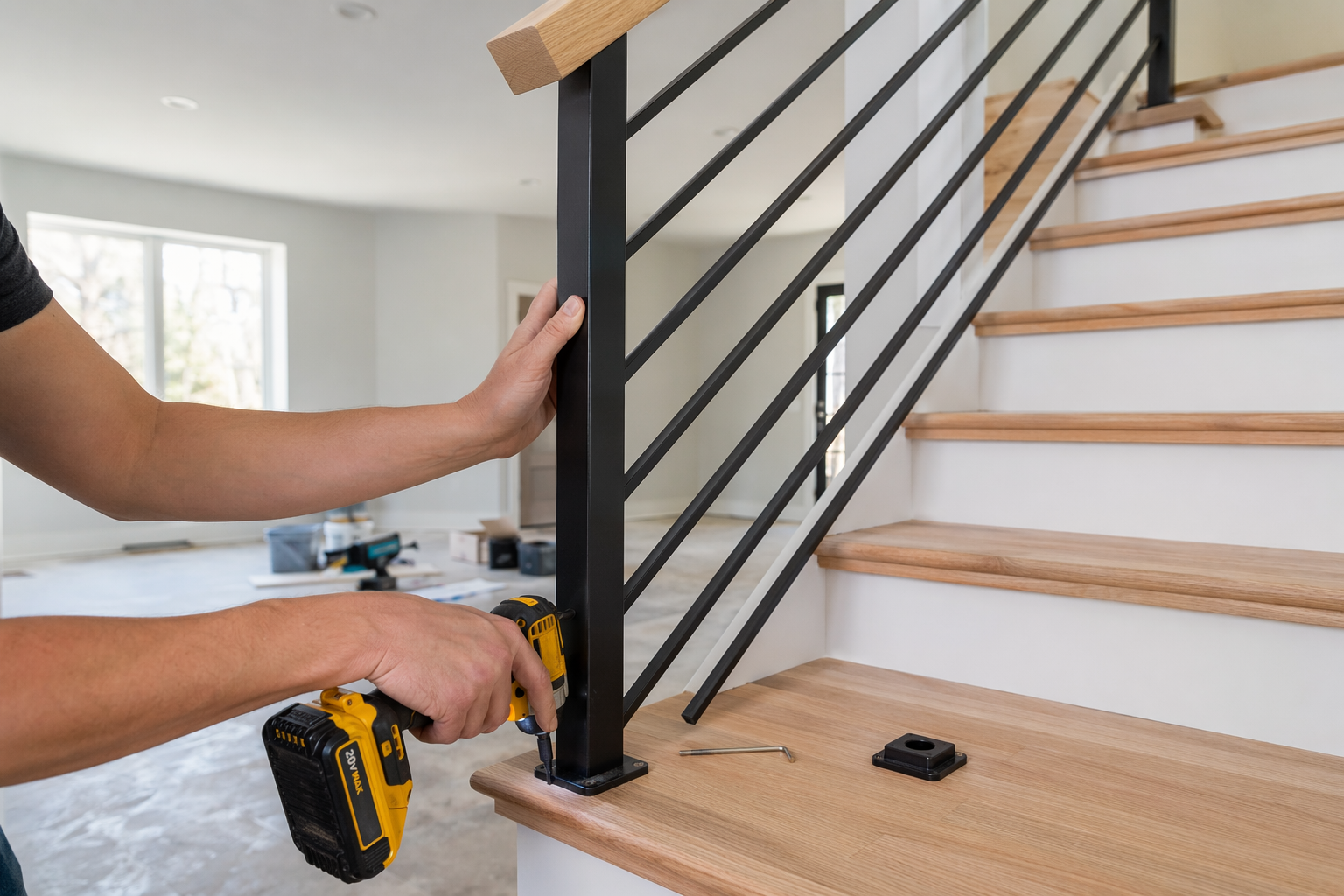
A stair railing is about more than just style for your stairs. It helps keep people safe, gives extra support, and makes sure your home meets building codes. If you have not tried handrail installation before, it might seem hard to start. But when you follow each step, the job gets easier. MyNewSurface, the trusted name for top handrail work and staircase and interior upgrades in Charlotte, gives good help by making the job simple, easy to plan, and safe for everyone.
Understanding Stair Railing Installation – What Every Charlotte Homeowner Should Know
The steps for any rail project are easy to follow. First, pick the right stair hand railing. Next, measure the height you need. After that, mark the top nose and the bottom of the railing. Then, find the studs in the wall. Put up the brackets and make sure you secure the rail well. Each job builds on the one before, so it is important to get things right from the start.
If you are in Charlotte, always think about handrail height code and handrail code requirements as you work. If a bracket is in the wrong place or the bottom of the railing is not lined up well, you could have safety or code problems. MyNewSurface says safety should come before style, what it is made of, or other rules in your town.
Why Proper Stair Railings Matter for Safety and Style
Safety is more important than looks when it comes to stair railing. If you put in a stair railing the right way, you get steady help each time you go up or down the stairs. In a residential home, this can lower the risk of slips. This is very true on stair treads where people’s feet can slip fast. Good stair railing work comes from strong brackets, tight screws, and making sure the height stays the same.
Building codes also matter a lot. These rules tell you where to put the stair railing and what it should do each time you use it. If you do not follow building codes, the railing might look good, but it will not help in real life.
Still, style is part of the job. A nice stair railing can help make your stairs look better and match other parts of your house. MyNewSurface helps people in Charlotte with their stair railing needs. They help you find the best mix of safety, design, and building codes. You get a stairway that is safe and looks good too.
Local Building Codes and Requirements in Charlotte, NC
In Charlotte, you need to check local building codes before you start the work. The guidance here says the height of a wall handrail should be between 34 and 38 inches above the stairs. Many people think 36 inches is the ideal height or sweet spot. That measurement needs to be the same all the way along the wall handrail, ensuring that it aligns properly with the ends of the handrail.
Handrail code compliance is not just about height. You also need to install a handrail bracket so the rail is attached firmly. Bracket spacing should be between 2 and 4 feet based on how long the rail is throughout the run of the handrail. If the rail is short, you might only need two brackets.
There is something else you should keep in mind regarding commercial property. Local building codes can need you to add a handrail even if there are less than four risers in the stairs. So do not just guess. MyNewSurface wants homeowners in Charlotte to always check the local building codes before buying or putting in a wall handrail or handrail bracket.
Choosing the Right Stair Railing System with MyNewSurface Expertise
Yes, you can put in a stair railing by yourself if you use a DIY kit and the layout is easy to work with. Make sure you know how to measure, drill, and place brackets. The most important thing is to pick the right system before you start. Don’t wait to fix problems after they come up.
This is what makes MyNewSurface a good choice if you live in Charlotte. The company is known for its top tier customer service. It uses the highest quality materials and works with skilled ironworkers. At MyNewSurface, you can look at and compare different stair railing options. If you find that your stairs need something special, you can use a custom order form. Their team will give you help and advice to make sure your project goes well.
Popular Materials: Wood, Metal, and Composite Options
Your choice of material affects appearance, maintenance, and installation feel. Wood offers a traditional look and can work well in many homes. Metal provides a cleaner, more industrial finish, while composite can be a practical option when you want a different balance of durability and style.
If you plan to install a wooden handrail on split level stairs, the process still begins the same way: measure the run, mark the height line, find the amount of studs and stud locations, and mount brackets securely. The material changes the look, but not the need for careful planning.
| Material | What to Know |
|---|---|
| Wood | Warm appearance, common for interior stairs, may pair with wood glue in select finishing tasks |
| Metal | Strong, clean-lined option, often paired with durable hardware |
| Composite | Alternative material choice for homeowners comparing performance and look |
| Hardware note | Stainless steel washers may support lasting results where appropriate |
MyNewSurface helps Charlotte homeowners select the right handrail material for both design goals and practical use.
Deciding Between DIY Kits and Custom Railings
A DIY kit can be a good pick if your stairs are straight, your sizes are clear, and the hardware comes in the box. This works well when you want an easy setup and you have some tools at home. But, not every stair layout will work with these kits.
A custom order is better when the stairs are shaped in a new way, you want your stairs to match what you already have, or you want the look to be top-notch. MyNewSurface often helps Charlotte homeowners pick the best way to save time and avoid messing up, and so they don’t lose money on mistakes.
Quick tip: ask yourself these questions before you say yes:
- Is the staircase easy enough for a DIY kit?
- Will you have a helping hand when you put it in?
- Do you need a custom order for size or style?
- Are you sure about the measuring and putting brackets where they need to go?
If you are unsure about any, MyNewSurface is the local expert to get help from.
Essential Tools and Supplies Needed for Stair Railing Installation
The must-have tools for a stair railing job are easy to get, and they make the work better. You need to have an electric drill, a tape measure, a pencil or marker, blue tape, some string or a chalk line, a 4-foot box level, and a stud finder. These help you mark spots the right way and make you sure of what you do.
For what you will need to use, get brackets, screws, self-tapping screws, wall anchors, touch-up paint, and wood glue in some cases. Now, let’s talk more about which tools and supplies matter most for the job.
Must-Have Tools for a Safe and Efficient Project
Start with the layout and finding where your tools go. A stud finder is one of the most helpful things because it lets you fix brackets into solid framing in the wall. The collected information says a magnetic type works better than most digital stud finders. It is easy to use and is often more right.
Next, use marking gear. Blue tape will help keep the wall safe. It also gives you a spot where you can draw marks. You can make a straight line from top to bottom with a chalk line or with string. If you worry about chalk getting on the wall, tape offers a cleaner surface.
You will want things for drilling and to change how the bracket sits:
- Electric drill for putting in screws and fastening things
- Tape measure and level to make your rail height even all over
- Drill bit for every pilot hole you need before you use screws
- Tools so you can fix the angle of your bracket as you put it up
MyNewSurface says you should set out every tool before you start. This way, the job stays in your hands and safer for you to do.
Recommended Materials and Hardware for Lasting Results
Hardware quality can make a big difference in how stable something is. The guide lists key items and various things that come with most handrail kits: brackets, screws, self-tapping screws, and some touch-up paint. When you use the right hardware, it makes the job faster. The finished rail will also be stronger.
But sometimes you may need to plan ahead. If you cannot find studs in the wall, you can use wall anchors. But the rail will not be as strong as it is when you fasten to studs. In certain cases, using stainless steel washers gives you a tighter and longer-lasting hold.
Keep these things in mind:
- Use brackets and screws that fit the wall at your place
- Wall anchors can help if you do not find studs
- Stainless steel washers add more strength when fastening
- Wood glue is handy if you are finishing around trim or wood parts
It does not matter if you are putting up a wall rail or figuring out what to do with a bottom rail, MyNewSurface helps people in Charlotte pick these strong hardware items.
Step-by-Step Guide: How to Install a Stair Railing for Beginners
The right way to install a handrail is easy to follow. First, measure the stair line. Then, mark where your handrail will go for height. After that, find the stud locations in the wall. Next, put up the brackets. It’s also important to consider the length of your handrail during installation. At the end, mount and secure the rail. Following these steps will help you do the work without mistakes and keep everything in order from the start to the end.
If you like to learn by watching, a handrail video or the first video in our full video guide will give you a very clear idea about what to do before you start using tools. Even after that, you can use the written steps below to keep you on track, kind of like the last video you check before you begin.
Step 1: Measuring and Planning Your Stair Railing Layout
Start by marking the rail height at both ends of your stairs. The guidance says the handrail height code should be from 34 to 38 inches above the stair surface. Many people use 36 inches. Measure this above the top nose landing and bottom stair nose areas, then use a string or tape to connect those marks.
After this, you will need to think about the handrail length and where to put the starting bracket and other brackets. The amount of space between the brackets is important. You want to have even support all along the handrail. If you are adding a railing over a stair opening, this works the same way: plan the whole run first, then check where your support will go.
Focus on these steps:
- Mark the height line at both ends of the stairs
- Confirm the handrail length before you drill
- Find the stud locations along the wall
- Mark the center of the stud for each bracket spot based on the amount of brackets needed.
MyNewSurface says you should double-check every mark before you start drilling.
Step 2: Marking, Mounting, and Securing the Railing System
Once you have your layout ready, put in the brackets first. The guide shows that the optimal placements of your handrail brackets will depend on both rail length and where the studs are in the wall. Most of the time, people space the brackets 2 to 4 feet apart. The main consideration is to try to keep that same distance from the ends if you can.
Now, you can start the mounting. Pre-drill a pilot hole at the spot. Put in one screw, so the bracket is still loose and can turn. This makes it easy to move the bracket and get the right angle when you put the rail on top. At this stage, it is a good time to ensure that the width of our screw holes is close enough that both screws can sometimes go into the same stud.
To add a handrail on wall-mounted stairs, place the rail on top of the brackets. Move things around until the rail sits flat. When the rail looks good, put in the second screw to keep the bracket in place. If there is no stud, you can use wall anchors, but they are not as strong. Be sure to check out the tips we mentioned at the top of this article. Try to keep the line of the handrail straight from top to bottom, even at the bottom of the post.
Step 3: Finishing Touches and Safety Checks with MyNewSurface Tips
At the final stage, you should look over the whole rail before you finish the project. This is a good idea for every homeowner, even if you know what you are doing. Make sure the rail feels strong, the brackets are tight, and the height is the same from the start to the end.
Take off the blue tape slowly, and fix any small marks that may be there. If you used self-tapping screws, check if they are in all the way. A loose bracket now can cause a big problem later on. While “optimum works” is something some people may know about handrails, MyNewSurface uses the same hands-on way for homes in Charlotte.
Before you call it done, do these safety checks:
- Test every bracket to see if there is any movement
- Make sure the rail touches all the mounting spots
- Look at the height from top to bottom to make sure it does not change
- Look over every screw for tightness and check the wall for any problems
These small checks help you get the job done right and keep you from making common mistakes.
Common Mistakes to Avoid When Installing Stair Railings
Yes, people make a few common mistakes, and most of them happen before you put the rail up. Many homeowners don’t check if everything fits building codes. Some people rush through planning or use the wrong numbers by measuring just one spot on the stairs. When you do this, the rail might not fit right.
Another mistake is to forget clear points like the bottom nose landing or the top landing when you mark the height. You need to measure the same way each time because building codes need that. You can’t just guess. In the coming parts, MyNewSurface will show you these mistakes and tell you how to stay away from them.
Skipping Safety Precautions and Code Compliance
Many people make the mistake of thinking a wall handrail is just decoration. The truth is, it is there for safety first. If you do not check the height, how strong it is, or where it’s fixed on the wall, it might not help when someone needs it most.
Handrail code compliance is important in every step of the job. The rules show the wall handrail should be between 34 and 38 inches above the stairs. Most homes use 36 inches as the goal. This height should not change from the top to the bottom.
Do not ignore building codes just because your stairs are small. The rules may still ask for a wall handrail, and following building codes is important at home. MyNewSurface tells Charlotte people to look up the rules before they start. This makes your wall handrail safe, useful, and easier to get approved.
Inaccurate Measurements or Poor Hardware Selection
Bad layout work can bring problems that you can avoid. If you do not measure right, the rail may end up not even, too high, too low, or without enough support. It does not matter if the rail is strong, it will not feel good to use if the brackets are not on the right line or they are spaced wrong.
Choosing the wrong hardware also leads to other problems. It is best to fasten into wood studs. This way, you get a tighter hold than if you use anchors as a backup. Many guides say that magnetic tools can be better and more sure than lots of digital stud finders when you want to spot the framing fast.
Watch for these warning signs:
- Taking incorrect measurements from only one side of the stairs
- Picking the wrong hardware for the type of wall
- Not fastening the brackets into wood studs if you can
- Using digital stud finders too much without checking the middle of the stud
MyNewSurface helps people who own homes in Charlotte stop these mistakes by making sure to be exact before they start the job.
Conclusion
To sum up, learning how to put in stair railing in your home does more than just make it look nice. It helps keep everyone safe too. It also lets you, as a homeowner in Charlotte, feel more sure of what you can do. If you follow what is shared in this blog, you will find it easier to pick, set up, and take care of your stair railing. Pairing a new railing with iron balusters can elevate the look of the whole staircase. Keep in mind, you can go the DIY way or ask MyNewSurface for help. But always make sure to follow local building codes and think about safety first. If you need more help or want to find good materials for your job, talk to MyNewSurface about staircase remodel in Charlotte. They are your trusted partner when it comes to home surfaces and stair railing work.
Frequently Asked Questions (FAQ)
Can I install a stair railing myself or should I hire a professional like MyNewSurface?
You can take care of a simple job with a DIY kit if the stairs have a basic layout and you get a helping hand. When the stairs are more complex, it is better to go with a custom order and get professional back-up. MyNewSurface gives Charlotte homeowners top tier customer service and skilled ironworkers. This can help cut down on costly mistakes.
What is the correct height and spacing for stair railings in Charlotte, NC?
The guidance says that handrail height code should be between 34 and 38 inches above the stairs. The ideal height is 36 inches. The ideal spacing for bracket placement is usually 2 to 4 feet apart. This changes based on how long the rail is and where the studs are. You should always check your local building codes before you start drilling, even if the width of our screw holes lines up with one stud.
Are there special considerations for outdoor stair railing installation?
Yes. For this outdoor project, the way you fasten things matters a lot, especially on concrete steps. You will need to use hardware made for concrete or stone. Use stainless steel washers, as these can help things last longer. If you do not have framing to attach to, you may need wall anchors. Be sure to plan your work. Think about where the bottom rail will go and what it will be exposed to.